Integral Calculus
The study of integration and its applications in engineering
Introduction to Integral Calculus
Integral calculus is the study of integration, which can be thought of as the reverse process of differentiation. It is used to find areas, volumes, central points, and many useful quantities. Integration helps us to understand the accumulation of quantities and the relationships between a function and its rate of change.
The fundamental concept in integral calculus is the definite integral, which represents the area under a curve between two points. The definite integral of a function f(x) from a to b is denoted as:
The Fundamental Theorem of Calculus establishes the relationship between differentiation and integration:
Where F(x) is an antiderivative of f(x), meaning that F'(x) = f(x). This powerful theorem allows us to evaluate definite integrals by finding antiderivatives.
Methods of Integration
Used for integrals where the integrand can be expressed as a product of two functions, especially when one function becomes simpler when differentiated.
Useful when the integrand contains a composite function, allowing us to simplify the integral by substituting a new variable.
Effective for integrals involving expressions like √(a² - x²), √(a² + x²), or √(x² - a²), which can be transformed using trigonometric substitutions.
A powerful technique for integrating rational functions of sine and cosine, converting them to rational functions of a new variable.
Integral Formulas
Essential integration formulas including power, exponential, logarithmic, and basic trigonometric functions.
Integration formulas for rational functions, radicals, and other algebraic expressions.
Integration formulas for trigonometric functions and their products, powers, and combinations.
Access our complete database of integration formulas, searchable by type, complexity, and function. Includes formulas for all standard integrals and special functions.
Applications of Integration
Integral calculus has numerous applications in engineering and science:
- Area Calculation: Finding the area under curves or between curves.
- Volume Calculation: Determining volumes of solids of revolution or solids with known cross-sections.
- Work and Energy: Calculating work done by a variable force or energy in physical systems.
- Center of Mass: Finding the center of mass of objects with variable density.
- Probability: Computing probabilities in continuous probability distributions.
- Signal Processing: Analyzing and processing continuous signals in electrical engineering.
In engineering, integral calculus is essential for analyzing physical systems, designing structures, and solving problems involving accumulation and total effect.
Learning Resources
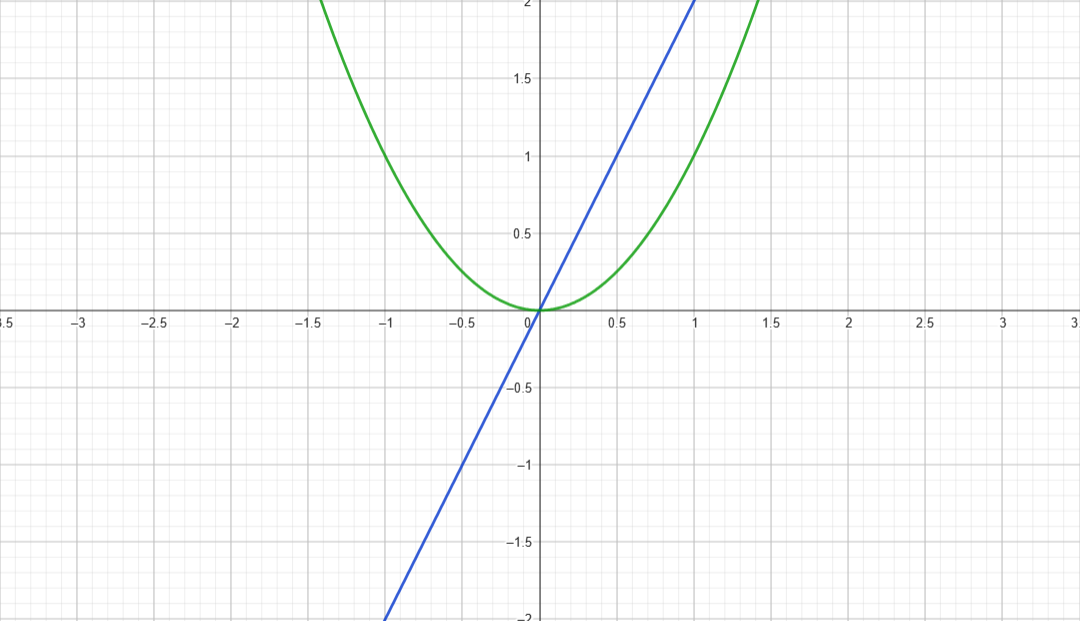
Visualization of a function (blue) and its integral (green)
Formula Database
Access our comprehensive collection of mathematical formulas, including integration formulas and techniques.
Explore Database